Reefer transport explained: how does your cargo stay at temperature?
A reefer is a refrigerated sea container with a built-in cooling unit. How does it work during road haulage, what do you use it for and what should you watch out for?
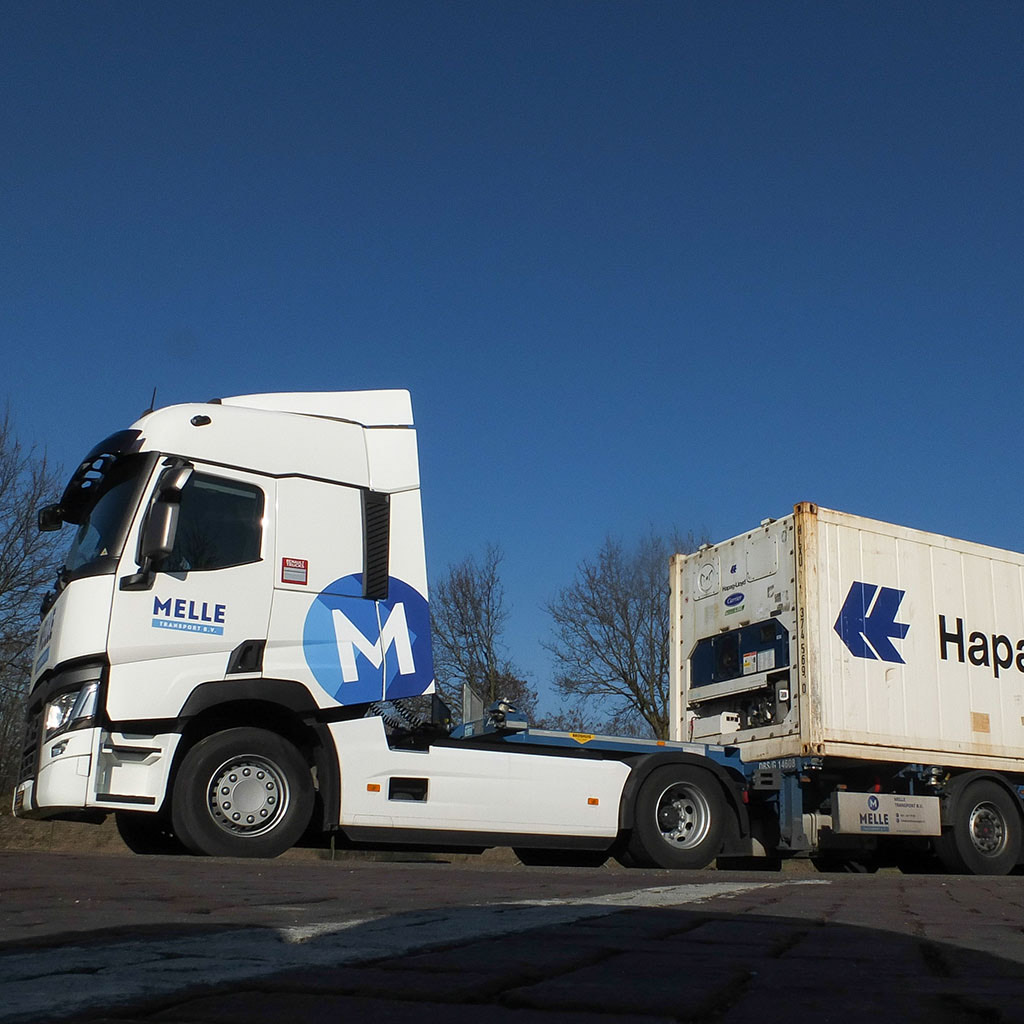
A reefer is a thermally insulated sea container with a built-in cooling unit that precisely controls the temperature in transit. That keeps temperature-sensitive cargo at exactly the set value, from the terminal all the way to the final destination. In this article we explain how reefer haulage by road works and what to watch out for.
What is a reefer?
The name “reefer” comes from refrigerated container. It is a standard sea container (usually 20ft or 40ft) with an integrated cooling unit at the front and an insulating wall. The unit regulates the temperature and holds it steady, whatever the weather outside. Many reefers also control air circulation, so the temperature is distributed evenly throughout the load.
How does the cargo stay at temperature during road haulage?
On board a vessel or at a terminal, the reefer draws power from a fixed connection. On the road, that connection is not available. This is why the cooling unit runs on a genset during road haulage: a generator set that supplies the electricity required. Without a genset, the cooling would drop out during the journey.
Melle Transport uses its own Carrier gensets, mounted centrally beneath the chassis. That brings a practical advantage: the same chassis can power both 20ft and 40ft reefers, which keeps planning flexible and avoids waiting for specialised equipment.
What are reefers used for?
Reefers carry anything that needs a controlled temperature. Think of foodstuffs, fresh and deep-frozen products, and other temperature-sensitive cargo. The cooling unit can chill and, where required, hold temperature or even heat, depending on the programme selected.
What should you watch out for with reefer haulage?
- The correct set point. Set the temperature to the requirement of the cargo and record it in the transport order.
- Pre-cooled cargo. A reefer maintains temperature, but it is not a blast chiller. Load the goods at the right temperature to begin with.
- Uninterrupted power. Make sure the genset supplies the unit continuously, including on the road.
- Monitoring. Follow the journey with track and trace, so you know where the container is and that the cooling is still running.
How Melle Transport handles it
We move refrigerated containers with our own Carrier gensets and GPS track and trace on every journey. Because the gensets sit centrally beneath the chassis, our equipment stays multi-purpose for both 20ft and 40ft reefers. Want to know more? Take a look at our reefer transport service or request a quote.
Frequently asked questions
What is a reefer container?
A reefer is a thermally insulated sea container with a built-in cooling unit that precisely controls temperature and, in some cases, ventilation and humidity throughout the journey.
How does a reefer stay at temperature on the road?
During road haulage a genset (generator set) supplies the electricity the cooling unit needs. Melle Transport uses its own Carrier gensets, mounted centrally beneath the chassis, so that the same chassis powers both 20ft and 40ft reefers.
What kind of cargo do you use a reefer for?
For any temperature-sensitive cargo that needs a controlled temperature in transit, from frozen to chilled and even heated.